
Doodle Magic | Beginner & Advanced Techniques for Doodling & Drawing Fun
Yasmina Creates · Artist & Creativity Cheerleader
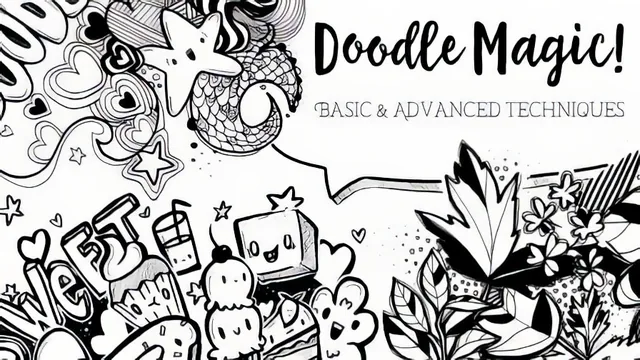
A 34-minute pep talk on loosening up your pen, useful for the anxious beginner but too short to teach real technique depth.
Doodle Magic is built around a single idea repeated in a dozen different costumes: there are no rules, so start drawing. Yasmina Creates spends the first four lessons on throat-clearing, defining doodling, listing supplies, and offering tips, before the class settles into its real content in lessons 5 through 11, which move through words, characters, a combined example, patterns and textures, another combined example, and two lessons on working from references.
The supplies lesson is more specific than most beginner art classes bother to be. It names an actual pen (Zebra's disposable brush pen), an actual set (the Sakura Manga Comic Pro Set of Micron pens), and an actual sketchbook (Canson XL Mix Media), with reasoning for each choice tied to paper weight and ink consistency rather than just brand-dropping. That specificity is the class's strongest habit and it carries through the tips lesson too, where the advice to commit to a pencil sketch before inking, and to match drawing speed to the tool (slow with a Micron pen, fast with a ballpoint), are concrete enough to actually apply the next time someone sits down with a page.
Where the technique lives
The patterns and textures lesson is the meat of the course. It walks through roughly twenty different fillers, alternating dots, waves, triangles, and stippling, each demonstrated in real time and tied back to observed source material like grocery store packaging and tree bark. This is the one lesson that functions as a technique library rather than a mood board, and it is the section worth returning to after finishing the class.
The two combined-example lessons, Sweet! and Doodle!, show how words, characters, and patterns get layered into one finished piece. Watching the layout decisions, like leaving empty space around a lettering doodle so it pops against a busier pattern field, or filling in awkward negative space with hearts and stars, teaches composition by demonstration rather than by naming the principle. The reference lessons follow the same logic, contrasting a photo-based doodle of teacups and plants with a live-reference session drawing actual leaves, and making the case that objects in hand reveal detail a photo can't.
What holds it back
At 34 minutes across 13 lessons, most individual lessons run two to three minutes, which limits how deep any single technique can go. The character lesson, for instance, covers faces and expressions in under two minutes and then defers real depth to the instructor's other classes on people and food doodles. That cross-promotion is fine but it means the character content here is thin on its own.
The class also never engages with drawing fundamentals like proportion, perspective, or line weight as design tools beyond the basic thick-thin contrast covered in supplies. Anyone who already keeps a sketchbook and wants to push technical skill further will find the pacing too gentle and the content too repetitive of the "no rules" framing. For someone who has never doodled and needs a nudge plus a shopping list, this delivers exactly that in well under an hour.
The standout
The patterns and textures lesson, which runs through more than twenty distinct fillers built from ordinary objects like grocery packaging and wood grain, is the closest thing to a reusable technique library in the class.
What you will learn
- How to pick doodling supplies (brush pens like the Zebra disposable, Sakura Micron sets, Bristol vs mixed-media paper)
- How to turn plain lettering into bubble, outlined, or patterned word doodles
- How to build simple characters from basic shapes by adding faces and expressions
- How to generate at least 20 distinct fill-in patterns and textures from everyday objects
- How to use photo and live references to add semi-realistic detail without losing a loose doodle feel
- How to use black fill and negative space to add contrast and finish a piece
Best for: Total beginners who feel blocked by a blank page and want permission plus a supply list to start doodling daily.
Skip it if: Anyone with existing sketchbook habits looking for structured lessons on perspective, anatomy, or advanced ink rendering.