
Discover Your Art Style
Ria Sharon · Practice Makes Better. riasharon.com
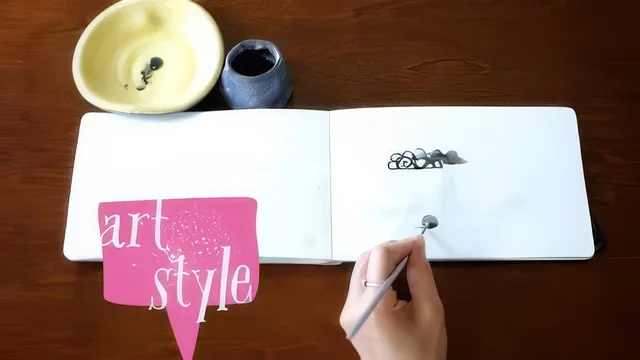
Five 30-minute sketching exercises promise a repeatable habit but the style-discovery payoff arrives only in a two-minute closing reflection.
A five-day habit, not a style lesson
Discover Your Art Style is built on a simple premise: personal style is not invented, it is uncovered by watching what you already do by default. The course tests that premise through five short exercises, each roughly 30 minutes, moving from tight constraint to total freedom. The first exercise has everyone draw the same black-and-white reference in pencil. The second keeps the same image but opens up medium choice. The third removes the reference entirely, asking for a color sketch drawn from a one-minute memory study. The fourth swaps the visual reference for a single abstract word. The fifth drops every constraint and lets the artist choose subject, medium, and color freely. The arc is well designed on paper: each round strips away one more variable, so by the end the artist can compare five pieces and see what stayed constant.
Where the course delivers is in that comparison exercise, saved for the closing lesson. Looking at the five pieces side by side, laid out from most-constrained to least, is genuinely useful for spotting a personal throughline in stroke weight, palette, or subject preference that would be invisible in any single drawing. The memory-based third exercise is the sharpest individual assignment, since it forces reliance on instinct rather than observation and tends to surface unconscious choices fastest.
Thin on instruction, heavy on reassurance
The course spends a disproportionate amount of its 14 minutes on encouragement rather than craft. Ria Sharon repeatedly reassures viewers that fear and self-doubt during sketching are normal, and frames the exercise itself as a way to notice the shape and duration of that fear. That framing has value for someone who freezes at a blank page, but it means very little screen time goes to demonstrating actual technique. The demos are sped up and narrated loosely, more mood-setting than instructional; a viewer hoping to learn shading, composition, or color mixing will not find that here.
The reliance on downloadable class files for the actual exercise images and prompts is also a structural weak point for a course meant to live as a standalone review. Four of the five assignments depend entirely on content outside the video itself, so the lessons describe a process more than they show one.
At 14 minutes across seven short lessons, this is closer to a prompt structure than a course. It works well as a five-day journaling exercise for someone who already draws and wants a low-stakes way to notice their own patterns. It does not work as an introduction to drawing, and it will feel thin to anyone expecting techniques, critique, or a finished piece beyond a set of quick sketches. The rating reflects a clever, well-sequenced idea let down by minimal instructional depth.
The standout
The memory-based Color Study, where the reference image is studied for one minute then removed, forcing reliance on imagination and revealing which visual choices are truly habitual rather than copied.
What you will learn
- How to structure a timed 30-minute daily sketch session around a single reference image
- How to observe and record habitual choices (medium, pressure, stroke, scale) across repeated drawings of the same subject
- How to draw from memory after a brief study period, without a reference to lean on
- How to interpret an abstract word prompt into a personal visual response
- How to select a fully open subject once constraints are removed
- How to review a small body of work side by side to spot recurring patterns
Best for: An artist with basic drawing skills who already sketches sometimes and wants a short, structured five-day nudge to reflect on their existing habits.
Skip it if: A true beginner looking for instruction on how to draw, or anyone wanting technique-level teaching on shading, color theory, or composition.