
Develop Your Signature Style: Overcoming Obstacles with a 5-Day Art Challenge
Genna Blackburn · Surface Designer & Illustrator
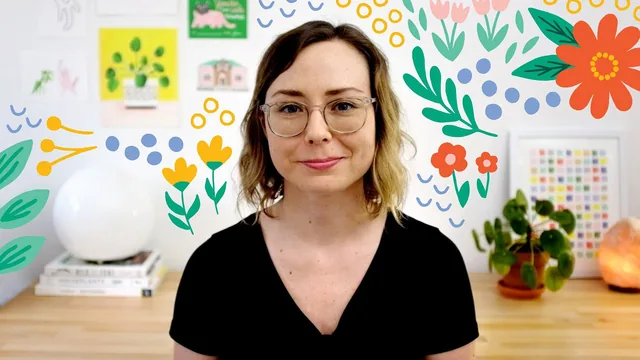
A 22-minute pep talk on making daily art without fear, not a technique tutorial for finding your visual style.
A structure, not a style guide
Genna Blackburn's class promises help finding a "signature style," but the deliverable is narrower and more useful than that phrase suggests: a five-day personal art challenge designed to remove the excuses that keep people from making enough work to develop a style at all. The nine short lessons move in a clean line. First she defines what a signature style actually is (a recognizable consistency in subject, line, color, or medium that emerges only after volume of output), then she breaks the challenge into four supports: setting parameters, carving out small pockets of time, permitting bad work, and getting comfortable with fear. The final lesson asks students to review their five pieces for recurring choices.
The most concrete and transferable piece of the class is the parameters lesson. Blackburn suggests picking a theme (five animals, five flowers, the same flower five times), locking in a medium and even a specific color palette before starting, and building a "Things That Resonate" Pinterest board beforehand to surface unconscious preferences. The logic is sound: fewer open decisions at the moment of creating means less paralysis and more actual output. This is the one lesson with an actual method behind it, and it alone could justify the short runtime for someone who has never structured a practice challenge this way.
The rest leans heavily on personal narrative and reassurance rather than technique. The pine cone drawing that later became a bestselling wrapping paper pattern is a good story about how discarded work can resurface, but it is an anecdote, not a repeatable process. The fear lesson quotes Elizabeth Gilbert's Big Magic at length and frames the core insight as a mindset shift: bad art today can inform good art tomorrow. That is true and worth hearing, but it is advice available in dozens of creativity books, not something specific to this class's method.
What's missing
Nothing in the class addresses how to actually analyze the five finished pieces beyond "look for commonalities." There is no worksheet, no checklist of visual elements to compare (line weight, palette, composition, subject choice), and no example of Blackburn walking through her own five-day results to demonstrate the analysis in action. For a class built around a five-step arc, the final and arguably most important step, drawing conclusions from the work, gets the least concrete treatment.
At 22 minutes, the class is honest about its scope: it is a motivational framework and a light planning exercise, not a technique course. Illustrators, surface designers, writers, or any maker who already has baseline skill but struggles with consistency, time, or fear of imperfect work will get a usable structure out of it in one sitting. Anyone hoping to learn how to actually identify or refine visual choices, brushwork, color theory, composition, will need to look elsewhere, since this class stops at "make more work and pay attention."
The standout
The parameter-setting method in the Make Parameters lesson, which turns a blank page into a fixed set of choices (theme, medium, palette) decided in advance so creative energy goes into making rather than deciding.
What you will learn
- How to design a personal 5-day art challenge with fixed parameters (theme, medium, palette)
- How to build a 'Things That Resonate' Pinterest board to spot your own visual preferences
- A method for scheduling 30-minute daily creative sessions instead of waiting for open blocks of time
- A mindset reframe for treating discarded or disliked pieces as useful practice rather than wasted effort
- How to review five days of work afterward to spot recurring choices in subject, line, color, and shape
- Why constraints reduce decision fatigue and make daily creating easier to sustain
Best for: Artists in any medium who have some technical skill already but feel stuck, blocked by fear of bad work, or unsure what makes their output distinctly theirs.
Skip it if: Someone wanting hands-on demonstration of drawing, painting, or design technique, since this class is entirely about mindset and structure, not skill-building.