
Demystifying Artificial Intelligence: Understanding Machine Learning
Christian Heilmann · Principal Program Manager at Microsoft
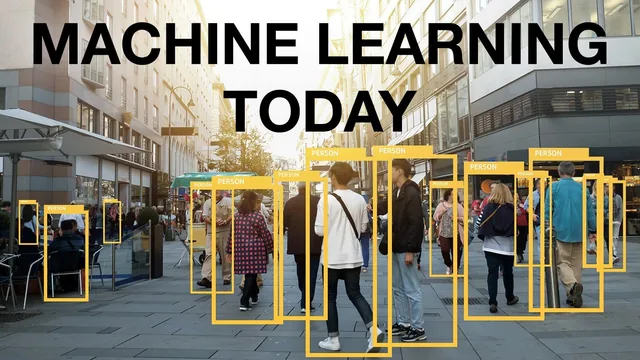
A Microsoft interface designer's plain-language tour of machine learning, built for the curious rather than the code-hungry.
Christian Heilmann's course opens with a disclaimer that shapes everything after it: this is machine learning from an interface designer's chair, not a data scientist's. That framing is the course's biggest strength and its clearest limit. Heilmann, a longtime web developer now at Microsoft, spends less time on how models are built and more time on how machine learning shows up in the products people already touch, from autocomplete keyboards to Google Translate to camera-based selfie corrections.
The opening two lessons do the most conceptual heavy lifting. Heilmann sets up the two dominant cultural narratives about AI, the Terminator fear of job loss and surveillance versus the Star Trek fantasy of a helpful ambient assistant, then argues both miss the point. Machine learning, in his telling, is neither magic nor menace. It is repetitive pattern-matching that only works when the questions fed to it are precise. This becomes the course's throughline: computers do not think, they compare enormous amounts of recorded human behavior against new input, and the quality of that comparison depends entirely on the quality and diversity of the data going in.
The strongest single lesson is the one on how machines get trained. Heilmann traces the lineage from Google's Quick Draw game, where millions of people doodled objects for fun, to the AutoDraw tool that turned those doodles into a shape-recognition dataset, to reCAPTCHA's shift from distorted text to street signs, which quietly built the labeled data self-driving cars need to recognize their surroundings. It is a concrete, verifiable explanation of a process most people never think about, and it does more to demystify machine learning than any abstract definition could.
Where the course thins out
Once the course moves into its tools survey, comparing Google Cloud, AWS, IBM Watson, and Microsoft's own Cognitive Services, the pace shifts from ideas to inventory. Heilmann walks through vision, text, and speech APIs largely by describing what a live demo on screen is doing: a face gets tagged with emotion scores, a hotel review gets parsed into sentiment and key phrases, a light-control phrase gets parsed into a command. Useful as an orientation to what existed at the time, but it names specific Microsoft services (LUIS, the custom speech service) without giving any viewer, technical or not, a task to actually attempt. Nothing here builds toward a project or a deliverable.
The ethics lesson is a highlight for a beginner audience, raising real, specific failures, facial recognition performing worse on people of color, voice systems mishearing certain accents, and tying them directly back to biased or narrow training data. It is a responsible inclusion that many introductory AI courses skip entirely.
The course's age is its central weakness. Recorded before generative AI, transformer models, or chatbots reshaped the conversation, it describes a world of narrow, single-purpose APIs bolted onto interfaces. Anyone arriving from ChatGPT or image generators will find the framing useful for the underlying concepts of pattern recognition and bias, but the specific tools and demos described no longer represent the current landscape. As a 58-minute primer on how to think about machine learning rather than how to use today's tools, it still holds up reasonably well.
The standout
The walkthrough of how machine learning models get their training data for free, via games like Quick Draw and utility-disguised tasks like reCAPTCHA, demystifies where the intelligence actually comes from.
What you will learn
- How to distinguish machine learning myths from its real capabilities and limits, framed around the automation vs. sentient-AI fear narratives
- Where training data actually comes from, including crowd-sourced games like Google's Quick Draw and reCAPTCHA labeling
- How to browse and compare vendor machine learning APIs (Google Cloud, AWS, IBM Watson, Microsoft Cognitive Services) by cost, region, and documentation
- How to read outputs from vision APIs such as face detection, emotion recognition, and image tagging
- How text analytics and language understanding services extract sentiment, key phrases, and intent from written or spoken input
- How to think through ethical tradeoffs like biased training data, consent, and accessibility when designing an ML-driven interface
Best for: Designers, product managers, and web developers who want a conceptual, non-coding grounding in machine learning before evaluating or commissioning AI features.
Skip it if: Anyone wanting to write code, train a model, or get current guidance, since the course predates the generative AI era and touches no hands-on implementation.