
Creative Space: Organize Your Studio or Workspace & Unlock Creativity
Amarilys Henderson · Watercolor Illustrator, Design Thinker
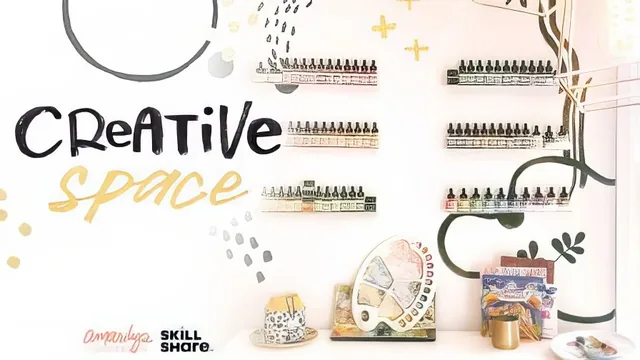
A quiz-and-mood-board approach to studio organization that trades hard systems for personal reflection and vibes.
What the course actually walks through
Creative Space runs just over an hour across ten short lessons, and it splits fairly evenly between self-reflection exercises and physical organizing advice. Amarilys Henderson, a watercolor illustrator who licenses surface-design work, teaches from her own studio and uses it as the running example throughout. The arc moves from goal-setting (a "Studio Style Quiz" and a fill-in-the-blank "space statement") into practical organization (prioritizing and arranging supplies) and finishes with aesthetics (mood boards and personal touches).
The quiz is the most memorable device: six rapid-fire multiple choice questions sorted by color, landing on a personality type like "gloss boss," "combo crafter," or "beautiful mess." It is presented as a warm-up rather than a rigorous diagnostic, and it functions that way. It will not tell anyone anything they could not have guessed about their own taste, but it does succeed at loosening up the viewer before the more substantive organizing content.
The strongest material sits in the two organization lessons. The idea of prioritizing by reach, treating your workspace as concentric circles where the innermost ring holds only what you want to use more often, is a concrete and reusable framework. Henderson demonstrates it with her own watercolor palettes: she explains why she moved a set of Dr. Ph. Martin's paints closer to her desk to force herself to use them more, and why fine-art materials she no longer needs got relegated to a bucket out of immediate reach. She also separates arranging criteria (size, kind, color, quality) from prioritizing criteria (goal-driven proximity), which is a useful distinction that most organizing content collapses into one step.
Where it thins out
The mood board and personalization lessons drift further from actionable instruction and closer to a tour of Henderson's own studio choices: a rolled banner she decided not to hang, gold paper cutouts, tassels, a Bob Ross pin. These sections are pleasant but offer little a viewer can directly apply, since the advice mostly reduces to "find one anchor piece and pick a color palette," stated at a level of generality any interior design primer would cover.
The class also never gets specific about tools or systems beyond what happens to be in Henderson's own studio. There is no guidance on containers, labeling, shelving units, or small-space solutions, and no printable framework walkthrough despite the course description promising a printable guide. Viewers hoping for a structured decluttering method, in the vein of a container system or a room-by-room checklist, will not find one here.
Verdict
This is a mindset class wearing an organization class's title. It works best as a reflection exercise for someone who already owns a stocked, somewhat cluttered creative space and needs a values-based filter for deciding what stays close and what gets hidden. It is not a systems or storage tutorial, and it leans heavily on one artist's particular taste (watercolor palettes, boho accents, gold hardware) as its running example, which will resonate with some viewers and feel irrelevant to others working in different media entirely.
The standout
The concentric-circle reach system, placing supplies in rings by how often you use them relative to your stated goal, is a genuinely transferable organizing principle beyond art studios.
What you will learn
- How to identify your organizing goal (create more, focus better, or create truer work) before touching any supplies
- How to prioritize supply placement using a proximity system based on how often you actually reach for something
- How to group and arrange tools by category, frequency of use, and workflow mode rather than by color or brand
- How to build a mood board that pulls one anchor image and a limited palette into the physical space
- How to separate distinct work zones (painting versus digital design versus shipping) so each mode has its own footprint
- How to layer in personal touches, history, and delight without letting them undermine focus
Best for: Hobbyist and semi-professional visual artists who already have a stocked, cluttered space and want a values-driven way to sort it.
Skip it if: Anyone wanting step-by-step storage builds, shelving recommendations, or shopping lists, or anyone without a dedicated crafting space to reorganize.