
Creative Cooking: Simple Sauces to Elevate Every Meal
Kelis · Chef, Songwriter, Designer, Entrepreneur
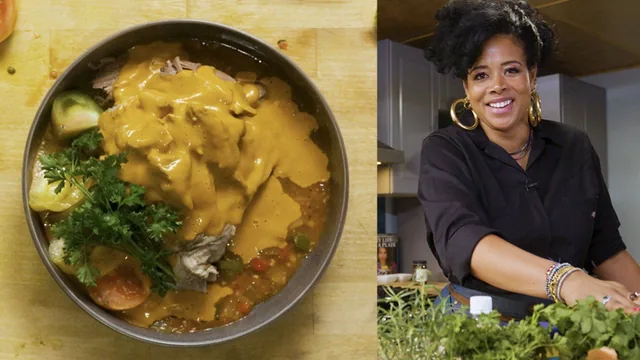
Kelis teaches sauce as a ratio, not a recipe, but the personal-history framing eats into the already-short cooking time.
Kelis opens this course by insisting that sauce is autobiography, and the class spends real time on that idea before it spends any time in the kitchen. The first two lessons are personal narrative: her path from being signed as a musician in her teens to enrolling at Le Cordon Bleu on four days' notice, and how her Puerto Rican heritage surfaces in what she cooks. It is a warm, specific story, and it does real work by framing food as an expression of identity rather than a checklist of steps. But on a 51-minute course, roughly a fifth of the runtime passes before a single ingredient is touched, and viewers who came for technique may find themselves waiting.
The technique, once it arrives
The teaching core is a ratio, not a set of recipes. Kelis frames sauce as three levers: fat, acid, and salt, and gives one number to hold onto, a 3:1 ratio of fat to acid for a base vinaigrette. She then builds a mustard-shallot-honey dressing on that ratio, using olive oil and red wine vinegar as the fat and acid. The real payoff comes in the next lesson, where she rebuilds the exact same structural idea into a guava vinaigrette, swapping in guava puree, lime, cumin, and coconut oil, and narrates the substitution live so the underlying formula is visible through the change in ingredients. That back-to-back pairing is the strongest teaching moment in the course, because it shows the ratio surviving a complete change of flavor profile instead of just asserting that it will.
The savory half moves through a jerk sauce built on habanero (a stand-in for scotch bonnet, since the class is filmed in California) with allspice, molasses, and toasted sesame oil, cooked down and hot-bottled for shelf stability. The closing lesson tackles gravy via a French veloute base, thickened with a butter-and-flour roux and built on a sofrito of onion, bell pepper, and garlic rather than the classical mirepoix, using braised lamb stock. Kelis narrates the mechanics as she goes, explaining why vegetables need to hit the same temperature before the next one goes in, and why cumin and nutmeg are added sparingly because they overpower a dish quickly. These asides are the most useful content in the class, more valuable than the recipes themselves, because they transfer to cooking generally.
Where it falls short
The course never states quantities beyond the one 3:1 ratio. Salt is "a little", cumin is "a pinch", stock is added "enough to submerge everything." For a cook building intuition this is arguably the point, but for anyone who wants to reproduce a dish exactly on the first try, the vagueness will be frustrating, and the class leans on downloadable recipes to fill that gap rather than stating amounts on screen. The pacing is also uneven: two full lessons of biography and philosophy before the first sauce, against a single, fast pass through the mother-sauce system that deserved more room given how much weight it carries.
As a personality-driven, feel-based introduction to building sauces from a formula rather than a recipe card, the course delivers a genuinely reusable idea in under an hour. As a rigorous cooking-technique class, it is thin on precision and would frustrate a more literal-minded learner.
The standout
The 3:1 fat-to-acid vinaigrette ratio, taught once and then reapplied unchanged to a second, totally different guava vinaigrette to prove the formula travels.
What you will learn
- The 3:1 fat-to-acid ratio as the starting formula for any vinaigrette
- How a base aromatic trio (onion-garlic-pepper, or sofrito) underlies most savory sauces
- How to build a guava vinaigrette by swapping one fruit and one spice profile into the same vinaigrette formula
- How to build a Scotch bonnet or habanero jerk sauce and can it hot for shelf life
- How to build a lamb gravy from a veloute base by layering aromatics, stock, and a flour thickener
- Why salt, acid, and fat are described as the three levers of a balanced dish
Best for: Home cooks who already own a knife and a blender and want a mental framework for improvising sauces from whatever is in the fridge, rather than a recipe to follow exactly.
Skip it if: Anyone who wants precise measurements, plated techniques, or French-brigade sauce training, since quantities are described in feel ('a little', 'a pinch') rather than amounts.