
Creating Dedicated Landing Pages: How to Get Better ROI for Your Marketing Spend
Ryan Engley · VP, Product Marketing @ Unbounce
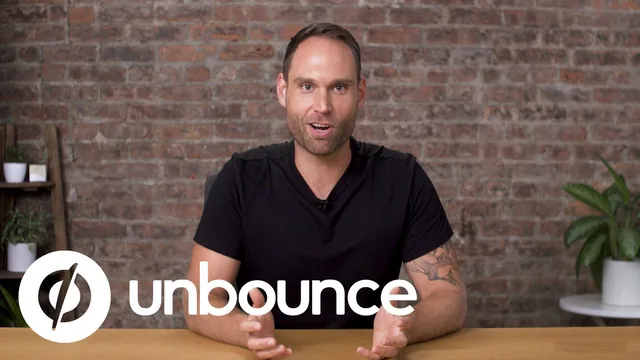
A VP of Product Marketing distills five landing page elements into 31 tight minutes, no fluff, no filler.
Ryan Engley teaches this course the way he'd pitch a client: fast, structured, and allergic to wasted time. In 31 minutes spread across eleven short lessons, he moves from why a generic website underperforms for a marketing campaign to a five-part checklist for building a page that converts. There is no padding here. Every lesson earns its runtime.
The Framework, Not the Fluff
The backbone of the course is two diagnostic concepts before the tactics arrive. Attention ratio is the ratio of things a visitor can do on a page to the one thing you want them to do, and Engley argues it should sit at 1:1. He illustrates the cost of ignoring this with a real estate example: a generic site with floor plan downloads, social links, and staff bios pulls attention away from the single form fill that matters. Message match follows, built around a simple test: does the landing page headline echo the exact promise made in the ad that brought the visitor there. His waterfront condo example, where a "waterfront condos" ad lands on a "retirement living" headline, makes the failure mode concrete rather than abstract.
From there the course narrows into the five elements: unique selling proposition, hero shot, features and benefits, social proof, and call to action. Each gets its own short lesson built around the same running example, a waterfront condo landing page built in Unbounce. The unique selling proposition lesson introduces the five second test, showing the page briefly and asking whether a viewer can state what it's about. It's a genuinely useful, repeatable heuristic that a marketer can apply outside of Unbounce entirely. The hero shot lesson makes a sharp distinction between showing what you sell and showing what the buyer wants, using a water view image instead of a rendering of the building itself. The social proof lesson adds a specific and slightly counterintuitive tip: keep social share buttons off the landing page and move them to the thank-you page, since a share button is itself a distraction from the one call to action.
Where It Falls Short
The course is explicit about being a beginner-level primer, and it delivers exactly that scope, nothing more. Anyone with even one course on conversion optimization under their belt will find the material familiar. The demonstration is tied closely to Unbounce's own page builder, which is a natural choice given Engley's role, but it also means viewers on other platforms have to do the translation work themselves. The features and benefits lesson explicitly defers deeper copywriting technique to outside resources rather than teaching it, which is a reasonable scope decision but leaves a real gap for anyone hoping to leave with finished page copy.
What the course does not attempt is also worth naming. There's no walkthrough of setting up an actual A/B test, no discussion of statistical significance, and no mention of page speed, mobile layout, or SEO tradeoffs for landing pages. The final lesson gestures at testing and iteration as the next step but stops short of teaching it.
As an introduction, though, it holds together well. The five elements are memorable, the running example keeps every abstract concept grounded, and Engley's pacing never drags. For a beginner deciding whether a dedicated landing page is worth building for the next campaign, this is a fast, credible yes.
The standout
The five-second test for a headline and subhead: show the page for five seconds, then ask if the viewer can say what it is about.
What you will learn
- How to calculate and apply attention ratio so a page has one goal and one call to action
- How to achieve message match between an ad's promise and a landing page's headline
- How to structure a unique selling proposition through a headline and subhead pairing
- How to choose a hero shot that shows the outcome a buyer wants rather than the product itself
- How to write features and benefits that map to a specific buyer's actual problems
- How to use social proof and a clear call to action button to close the conversion loop
Best for: Marketers, small business owners, or freelancers who send paid traffic to a generic website and need a fast, practical framework for a dedicated campaign page.
Skip it if: Anyone who already runs A/B tested landing pages or wants hands-on copywriting, design, or CRO analytics training beyond the conceptual basics.