
Copywriting Basics for Successful Sales: Time-Tested Tactics that Prompt Action
Jack Zerby · Design at Gumroad
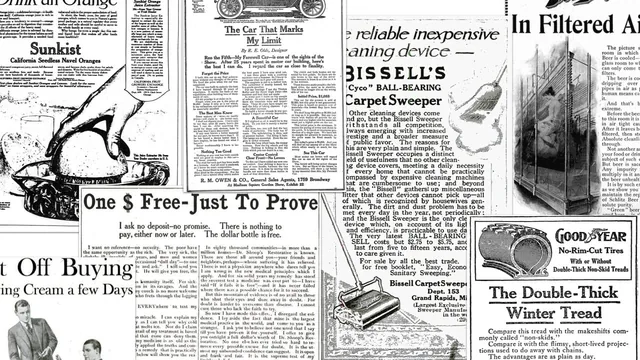
A 15-year product designer distills 80 years of direct-response copywriting into headlines, frameworks, and a daily practice habit that actually sticks.
This course treats copywriting as an inherited craft rather than a modern invention, and that framing is both its strength and its limiting factor. Jack Zerby, a designer who has worked at Vimeo, Pentagram, and Frog before co-founding Flavors.me and Goodsie, builds the entire class around direct-response writers from the 1930s through the 1980s: Robert Collier, Gary Halbert, Dan Kennedy, John Caples, David Ogilvy. The pitch is that human nature has not changed, so techniques proven on paper sales letters mailed decades ago still work in email and on landing pages today. It is a credible argument, and the course backs it with real historical artifacts rather than abstract rules.
Structure and core teaching
The thirteen lessons move in a sensible arc: define copywriting, understand the audience, learn structural frameworks, master headlines, then handle features-versus-benefits and length decisions. The audience lesson is the most immediately useful, built around Dan Kennedy's ten market questions (what keeps them awake at night, what trends affect their business, do they have their own language) and the instruction to write for one named, imagined person rather than a demographic. The framework lessons introduce Star-Story-Solution, AIDA, and Problem-Agitate-Solution, each illustrated with an actual old sales letter or a modern landing page like Brennan Dunn's freelance-rate course, so the abstract pattern is always paired with a worked example.
The headline section is the strongest stretch of the course. It walks through Caples' three headline types (self-interest, news, curiosity), then shows dozens of real headlines, both effective and weak, including a magazine ad audit where Zerby points out that "Fancy something brighter in black" fails because it never mentions tea. The Ogilvy anecdote about writing 104 headlines before settling on the Rolls-Royce clock line lands well as proof that headline writing is iterative work, not inspiration.
Where it falls short
The features-and-benefits lesson, using Gary Halbert's used-car example (40 miles per gallon becomes "saves money"), is clear but thin, running through only a handful of paired examples before moving on. The short-versus-long-copy lesson leans entirely on quoted maxims from Kennedy and Michel Fortin rather than demonstrating the tradeoff with a side-by-side example, which makes it the least concrete section in the course. And because every reference point predates 2015, there is nothing here about modern channels: no social copy, no SEO considerations, no A/B testing tools, no examples from apps or subscription businesses.
The closing lesson on daily practice, hand-copying famous sales letters word for word to internalize their rhythm, is a genuinely distinctive idea and gives the course an ending that pushes toward habit rather than just information. Combined with the assigned project of writing a headline plus 500 to 1500 words of copy in a chosen framework, the course leaves the learner with something to actually produce, not just watch. For 81 minutes, it covers a surprising amount of ground, though it rewards someone willing to go find the source books afterward rather than treating this as the complete education.
The standout
The exercise of separating every product feature onto one card and its corresponding customer benefit onto another, forcing concrete translation instead of vague claims.
What you will learn
- How to define a specific audience using Dan Kennedy's ten market questions instead of vague demographics
- How to apply classic frameworks like Star-Story-Solution and AIDA to structure a sales message
- How to write and test headlines using self-interest, news, and curiosity as the three core levers
- How to turn a product feature into a benefit by asking what it actually means to the reader
- How to decide between short and long copy based on the complexity of the buying decision
- A daily practice method (hand-copying famous sales letters) for building copywriting instinct over time
Best for: Founders, marketers, and designers who write their own promotional copy and want a grounded, historical toolkit rather than modern growth-hacking tips.
Skip it if: Anyone wanting current digital-marketing tactics, SEO copywriting, or examples drawn from social media and app-era campaigns rather than 20th-century mail-order ads.