
Cooking Like a Chef: 5 Fundamental Skills for Kitchen Success
Alex Gabriel Aïnouz · Youtuber & Home Chef
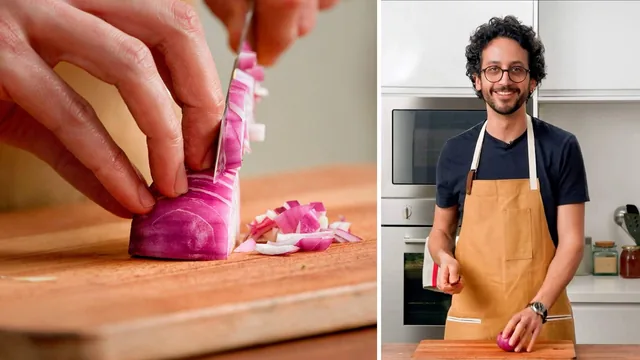
A ten-year YouTube chef compresses his kitchen fundamentals into 50 tight minutes, but the pace demands you already own a knife.
A crash course in kitchen orientation, not technique
Alex Gabriel Aïnouz opens by framing cooking as a superpower and then spends the next 50 minutes trying to compress a decade of home-kitchen experience into a single sitting. The structure is sensible: mindset, space, ingredients, knife skills, heat, leftovers, then two cook-alongs that fold everything together. It moves fast, almost too fast, but the arc holds together because each lesson deliberately sets up the next.
The mindset lesson is the most unusual part of the course. Instead of jumping into technique, Aïnouz asks students to pick a personal goal dish, something like a grandmother's omelet or a perfect bowl of ramen, and frames the entire class around chasing that target through cycles of beginner's luck, failure, and adjustment. It is a nice psychological reframe for anyone intimidated by cooking, though it is more pep talk than instruction.
The pantry and tool sections are the strongest material in the course, mostly because they are concrete and opinionated. Aïnouz names actual items: an eight to nine inch chef knife, a cutting board at least 13 by nine inches, a silicone spatula paired with a flexible metal one for scraping fond, and a specific set of spice blends like a five-spice mix, a quatre epices, and a couscous seasoning rather than a shelf of single spices. The philosophy of buying multitaskers instead of unitaskers like a risotto spoon is a genuinely useful filter for anyone building a kitchen from scratch.
The knife skills lesson covers the pinch grip, rough chop, slice, strips, and dice in quick succession, along with a dedicated method for breaking down an onion and a roll-and-slide technique for cutting herbs without bruising them. The demonstrations are clear, but the pacing assumes a viewer can absorb five distinct cuts back to back with no repetition or practice checkpoints. A true beginner following along in real time will likely need to pause and rewind more than once.
Heat gets a practical three-way comparison of stove, oven, and microwave, including the odd but well-argued case for microwave-cooked mashed potatoes. The leftovers lesson is the most original idea in the course: using acid, fresh herbs, and wrappers like rice paper or nori to revive cold, bland leftovers into a new dish, demonstrated with a salmon spring roll and a repurposed roasted vegetable antipasti.
Where it delivers and where it thins out
The two cooking demonstrations, an omelet and a steak with pan sauce, work well as capstones because they visibly reuse the knife cuts, heat management, and pantry choices taught earlier. The steak segment in particular is useful for its doneness test using the thumb-to-finger pinch trick and its walkthrough of deglazing a pan with brandy and toasted peppercorns to build a real sauce from fond.
The tradeoff for that breadth is depth. Nothing here gets the repetition or troubleshooting a true novice needs to build muscle memory, and several techniques, especially the onion cut and the pan sauce reduction, would benefit from a slower second pass. As a orientation and confidence primer for someone who has never touched a knife, it succeeds. As a technique-building course, it is too brief to leave much residue without significant outside practice.
The standout
The onion-chopping method, cutting vertical slices while keeping the root intact, then flipping and dicing for stability, is a small, precise technique that pays off every time someone cooks.
What you will learn
- How to set up an efficient kitchen workflow around a sink-stove-workbench triangle and stock a versatile, multitasking tool kit
- How to build a base pantry, fridge, and freezer stocked with oils, spice blends, sauces, and wrappers for improvised cooking
- Core knife cuts: rough chop, slice, strips, dice, the onion method, and the roll-and-slide technique for herbs
- How heat behaves differently on the stove, in the oven, and in the microwave, and when to use each
- How to repurpose leftovers into new dishes using acid, freshness, and wrappers like rice paper or tortillas
- How to cook a folded rustic omelet and a pan-seared steak with a peppercorn brandy pan sauce
Best for: Total beginners who want a fast, opinionated orientation to kitchen basics before they start following individual recipes.
Skip it if: Anyone who already owns a decent knife and understands basic heat control, since the material moves too quickly to teach real technique depth.