
Confident Watercolors: Dealing with Mistakes
Amarilys Henderson · Watercolor Illustrator, Design Thinker
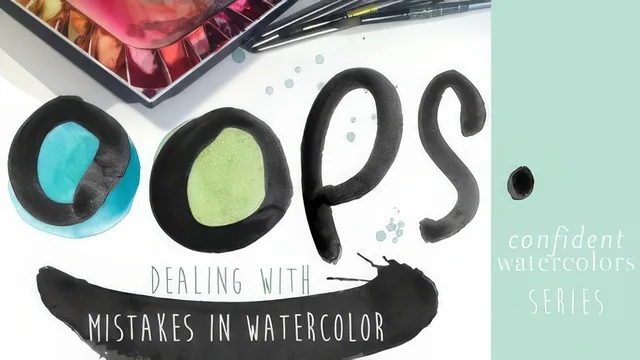
An 18-minute walkthrough of a four-step fix-it process that turns watercolor bleeds and blotches into deliberate-looking design choices.
"Confident Watercolors: Dealing with Mistakes" is a tightly scoped 18-minute class built around a single idea: mistakes in watercolor are not a sign of failure but a routine part of the medium, and there is a repeatable four-step process for handling them. Amarilys Henderson frames the class as the second installment in her Confident Watercolors series, and it plays like a focused troubleshooting guide rather than a comprehensive painting course.
The structure is simple and effective. Step one is removal: blotting out wet pigment with a dry brush, paper towel, or sponge before it sets, demonstrated on muddied Christmas berries, bled flower petals, and a blue circle that needed to become green. Step two is re-framing, the class's strongest concept, which asks the painter to pause and consider whether the original plan is still necessary or whether the mistake points toward something better. Henderson illustrates this with dark splatters she decides to soften into a light gray wash rather than fight into pure white, and with a lettering slip where an extra "e" gets reworked into an "r." Step three is reworking, essentially executing the new plan once it is chosen, and step four is the cover-up, using opaque body-color like Dr. Ph. Martin's Pen White, acrylic ink, gesso, or acrylic paint to hide what blotting alone could not fix.
What makes the class useful is that each step is paired with a specific, visible example rather than left abstract. The berries, the lettering, the blue-to-green circle, and the rectangular vase turned into a rounded bowl all recur across the lessons, giving the four steps a through-line instead of feeling like a checklist. The closing case study is the best part of the class: Henderson walks through a full floral piece where a boxy vase shape she disliked gets reframed as a round bowl, smudged and rewetted to blur the old edge, and finally distracted from with a patch of pink and white pattern detail. Watching all four steps applied together on a real piece, with the reasoning spoken aloud in real time, does more to build confidence than any single technique demonstration could.
The class project asks students to paint a circle wet-on-wet and then deliberately change its color, a small but pointed exercise that forces practice of steps one and three without requiring a full painting.
Where the class comes up short is depth and scope. At 18 minutes, it moves quickly, and viewers get shown solutions more than they get taught the underlying judgment calls, like exactly when a mistake is worth fighting versus when to let it dry and move on. It also assumes a working knowledge of watercolor behavior, wet-on-wet bleeding, paint-to-water ratios, and basic brush control, so it will not serve as a first watercolor lesson. Materials like Dr. Ph. Martin's Pen White are mentioned by name but not compared in any depth, which limits how much a viewer can act on that information without further research.
As a narrow, well-illustrated fix for a specific anxiety, mistake-phobia, this class does its job efficiently. It will not teach anyone to paint, but it will likely change how a shaky-handed painter reacts the next time a wash goes wrong.
The standout
The case study where a blocky vase shape is reframed into a round bowl and camouflaged with layered color, pink distraction, and white pattern work, showing the full repair process on a real piece rather than an isolated swatch.
What you will learn
- How to lift excess pigment with a dry ('thirsty') brush versus a paper towel depending on how wet the paper is
- How to re-frame a mistake by asking what else the piece could become instead of forcing the original plan
- How to rework a corrected area, including re-wetting dried paint to blend a fix seamlessly
- How to cover up a stubborn mistake using body-color options like Dr. Ph. Martin's Pen White, acrylic ink, gesso, or acrylic paint
- How to balance the water-to-paint ratio when a mistake stems from too much of one or the other
- How to apply the same four-step process to a real finished piece, from a boxy vase to a full floral composition
Best for: Beginner to early-intermediate watercolor painters who already know basic brush handling and want a calmer, more resilient mindset for handling wet-on-wet bleeds and color mistakes.
Skip it if: Complete beginners who haven't picked up a brush yet, or anyone hoping for in-depth technique instruction on washes, mixing, or composition, since this class assumes those basics and stays narrowly focused on damage control.