
Classic Pattern Styles - Learn To Design Indian Floral Patterns
Bärbel Dressler · Pattern designer & history nerd
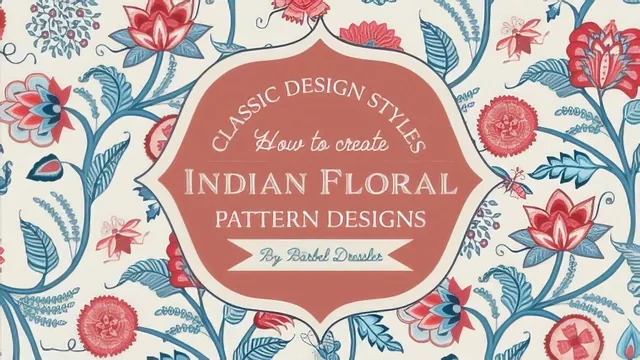
Five dense history lessons on chintz and colonial trade lead into a genuinely useful Illustrator system for building half-drop repeats, if you already know your way around the software.
A history lesson that earns its length
Five consecutive lessons on the history of Indian floral textiles sit at the front of this course, and they are more substantial than the usual "inspiration" preamble most pattern classes tack on. The material covers the mechanics of Z-twist cotton spinning, the plant and mineral sources behind natural reds, blues, and blacks, resist-dyeing and block-printing methods, and the economic story of how chintz was banned and then legalized across Europe. It closes with a discussion of the Tree of Life motif and palampores as the likely ancestor of the trailing-branch composition seen in nearly every Indian floral design. This section is well-researched and specific rather than a vague mood board, and it gives real justification for the stylistic choices taught later, like why a single branch carries flowers at every stage of bloom simultaneously. The tradeoff is pacing: five history lessons before any drawing begins is a lot for a class billed as a design course, and viewers eager to start sketching will need patience.
From sketch to repeat
Once the history wraps, the course moves into a clear four-part production arc: styles and characteristics, drawing exercises, pattern planning, and final assembly in Illustrator. The drawing exercises build in a sensible progression, starting with directional lines for leaves and simple five-petal flowers before tackling layered, imaginary tulip-inspired blooms with frills and seed pods. The instruction leans on a consistent method, block in a rough shape, add directional guide lines, then build detail in layers, which is a transferable habit for botanical illustration generally, not just this pattern style. The postit-note layout technique, borrowed from a Swedish wallpaper designer, is a smart low-tech way to preview how motifs cluster and repeat before committing to final artwork, and it works for straight, half-drop, and tiled layouts alike.
The back half of the course is where the real technical payoff lives. Coloring is taught two ways, hand-painted with gouache or watercolor and then scanned and cleaned up using Live Trace, or colored natively in Illustrator with the Live Paint Bucket and Blob Brush. Both get enough screen time to be genuinely followable, including the fiddly work of reducing traced colors down to a clean palette using Select Same Fill. The final lessons on building a half-drop repeat, first with Illustrator's built-in Pattern tool and then manually by duplicating and offsetting copies by exact pixel distances, are the strongest material in the course. Watching both methods side by side clarifies what the automated tool is actually doing, which is valuable even for people who will only ever use the shortcut version.
The course is honest about its own prerequisites, and rightly so. It genuinely assumes comfort with Illustrator and prior exposure to repeat construction, and the drawing exercises assume some baseline confidence with a pen. Anyone missing either will find sections here move quickly past explanation and into execution. For the intended intermediate to advanced audience, though, the combination of real textile history and a fully worked repeat-building method is more substantive than most pattern design classes offer.
The standout
The manual half-drop assembly lesson, where motifs are duplicated, offset by exact pixel distances, and trimmed by hand, teaches the underlying logic of repeat construction in a way the automated Pattern tool alone never would.
What you will learn
- The historical and technical vocabulary of Indian floral textiles (indienne, chintz, toile peinte, kalamkari) and how the pattern spread from India to Europe
- How to freehand ink motifs in an 18th-century painted-cloth style, from simple leaves to layered complex flowers
- A postit-note layout trick for planning straight, half-drop, and tiled repeats before drawing final motifs
- How to build a limited color palette using Pantone books and swatch groups in Illustrator
- Two separate coloring workflows: gouache/watercolor motifs scanned and cleaned up with Live Trace, versus digital coloring with the Live Paint Bucket and Brush tools
- Two methods for assembling a half-drop repeat swatch in Illustrator, one using the built-in Pattern tool and one built manually by offsetting and erasing copies
Best for: Illustrator users who already understand repeat construction and want a structured path from historical motif research to a finished, sellable half-drop floral pattern.
Skip it if: Beginners to both drawing and Illustrator, or anyone wanting a quick pattern template rather than a full research-to-repeat process spanning history, drawing, coloring, and vector assembly.