
Cinematography Basics: Introduction to Lighting Techniques
Zak Mulligan · Cinematographer
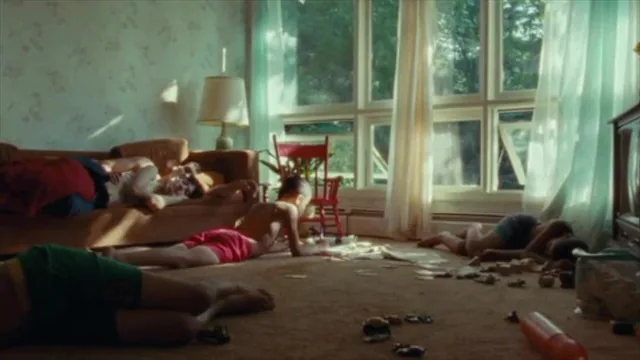
A working cinematographer breaks lighting into seven concrete elements you can practice with a phone and a lamp in under an hour.
Zak Mulligan's course does one thing and does it cleanly: it gives beginners a vocabulary for lighting they can use immediately, without a lighting kit. The structure is a straight march through seven named elements, each one introduced, demonstrated on camera, illustrated with a clip from Mulligan's Sundance feature We the Animals, then handed off as a homework exercise. That repetition becomes the course's real teaching method. By the fourth or fifth element, the pattern is familiar enough that the viewer starts predicting what to look for before Mulligan says it, which is a sign the framework has actually landed.
The choice to build everything around household objects is the course's smartest decision. Direction is taught with a single light bulb rotated around Mulligan's own face. Shape is taught by cutting light with towels and garbage bags. Quality, the hardest concept to grasp abstractly, becomes concrete the moment Mulligan swaps a bare bulb for a paper lantern and shows the shadow under his eyes soften. Texture gets the most inventive treatment of the seven: shining a flashlight through a mason jar, a houseplant, and a fly swatter to show how ordinary objects break up light into patterns. None of this requires a grip truck. It requires a phone with manual exposure control, which the course flags early as a real requirement, since an auto-exposing camera will quietly cancel out every intensity and quality exercise by compensating for the light changes on its own.
Where the Depth Runs Out
The course's ceiling is also its structure. Each element gets roughly five minutes: one explanation, one film clip, one demo, one exercise. That pace suits an introduction, but it means color, arguably the most complex of the seven elements, gets barely more airtime than movement, which is really just "light that changes over time." Anyone who wants to understand white balance, kelvin temperature, or how gels actually work will need a second course. Mulligan gestures at this limitation himself, pointing viewers toward Josef Albers and general color-theory reading rather than teaching it inside the class.
The film clips do real work that a written lesson could not. Watching Jonah's shadow thrown onto a wall by a low window, or the boys walking through a hallway in silhouette after hearing their mother arrive home, makes an abstract claim like "silhouette creates mystery" immediately legible. The choice to source every example from a single film also lets throughlines emerge: the same director explaining direction, shape, and color all from footage the viewer has already half-memorized by the halfway point.
The final project, a three-shot "visual haiku," is a reasonable capstone but a soft one. It asks students to pick an emotion and apply at least two lighting elements per shot, which is the right instinct, but there's no rubric, no peer feedback loop beyond a vague invitation to post to a class board, and no walkthrough of how Mulligan's own example haiku (built around isolation) actually resolves in edit. It ends the course on an assignment rather than a synthesis.
At 64 minutes, this earns its "Quick win" billing. It will not turn anyone into a working cinematographer, and it never claims to. What it delivers reliably is a shared language, seven words that replace "make it look cinematic" with something a person can actually adjust with a lamp and a bedsheet.
The standout
The shape and quality demonstrations, where Mulligan uses a garbage bag, a bedsheet, and paper lanterns to show exactly how bounce and diffusion soften or harden a shadow.
What you will learn
- How to name and control the seven elements of lighting: direction, shape, color, intensity, quality, texture, and movement
- How to shape light using household objects (blankets, garbage bags, cardboard) as makeshift flags to control where a viewer looks
- How to change light quality from hard to soft by adjusting light source size and bounce, using paper lanterns and bounced surfaces
- How to create textured light by passing it through mason jars, houseplants, and venetian-blind-style objects
- How to read lighting choices in a real film (We the Animals) and connect direction, color, and intensity to story and emotion
- How to shoot a three-shot 'visual haiku' that applies at least two lighting elements per shot to express a mood
Best for: Beginner filmmakers, photographers, and film-curious viewers who want a plain-English vocabulary for lighting and are willing to shoot phone-camera exercises with things already in their house.
Skip it if: Anyone who already understands three-point lighting, color theory, or professional grip gear, since the course deliberately avoids technical depth and equipment discussion.