
Branding for Entrepreneurs: Building an Aspirational Brand in the Instagram Era
Cyndi Ramirez-Fulton · Founder of Chillhouse
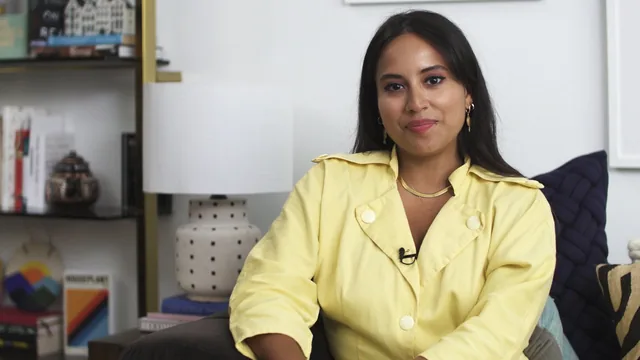
Chillhouse founder Cyndi Ramirez-Fulton compresses her actual brand-building process into 56 minutes of frameworks, worksheets, and named real-world examples.
Cyndi Ramirez-Fulton built Chillhouse, a self-care brand with a physical New York location and an online following, and this class walks through the sequence she says she used to build it: story, audience, voice, visual identity, growth, partnerships, and personal brand. That order is the class's real backbone. Each lesson ends with a worksheet exercise, so the nine core lessons function less like a lecture and more like a workbook read aloud, with Ramirez-Fulton narrating her own answers as a worked example before handing the same questions to the viewer.
The strongest material is the copywriting layer in the voice and visual identity lessons. Ramirez-Fulton draws a clean distinction between a brand name (which can be evocative and vague, like Nike), a tagline (a short call to action, like "Just do it" or Chillhouse's "Find your chill"), and a slogan (a fuller explanatory line, like Mastercard's "there are some things money can't buy"). That three-way split is a genuinely useful piece of copywriting scaffolding that most beginner branding content skips past. The visual identity lesson pairs it with equally concrete guidance: sans serif fonts read as approachable to a younger audience, warm reds and oranges evoke hunger, blue signals trust, and a brand needs three to four font weights across logo, subtitle, and body copy, not one font stretched everywhere.
The audience lesson takes an unusual angle worth naming directly. Rather than pushing spreadsheets of demographic data, Ramirez-Fulton has the viewer invent a single imagined customer, essentially a brand muse, and then interrogate that one person's age, income, neighborhood, and shopping habits. It is a shortcut that trades statistical rigor for usability, and for a founder with no market research budget, that trade is defensible.
Where the class runs thin is depth and proof. Chillhouse is the only case study threaded through every lesson, so techniques that claim general applicability rest almost entirely on one company's outcomes, with brief cameos from Nike, Chanel, Dollar Shave Club, and Poo-Pourri used more as mood references than analyzed examples. The partnership lesson describes the IGK Hair collaboration in broad strokes, useful as a directional structure, thin as a template for negotiating an actual deal. Nothing here touches paid acquisition, unit economics, or how to validate a brand story before spending money building around it, gaps that matter once someone tries to move from worksheet to execution.
The final lesson on personal branding earns its place rather than feeling tacked on. Ramirez-Fulton is candid about founder visibility as a distinct acquisition channel, one that opens partnership doors and press opportunities separate from the brand's own following, and she gives a low-pressure entry point: start posting about whatever already feels comfortable, then ease the business into the feed over time.
At 56 minutes, the class does not overstay its welcome, and its worksheet structure makes it easy to work through in one sitting with a notebook open. It reads as a founder's field notes formalized into a curriculum rather than a branding professional's systematic course, which is exactly what it is. Anyone wanting rigor, agency-level process, or design execution should look elsewhere. Anyone stuck at the blank-page stage of "I have an idea but no idea how to name or describe it" will get a usable starting structure in under an hour.
The standout
The three-tier breakdown of brand name versus tagline versus slogan, illustrated with Nike's 'Just do it' against Chillhouse's own 'Find your chill,' gives a genuinely reusable copywriting structure.
What you will learn
- How to trace a brand back to a founding 'why' or a specific market gap it fills, using Chillhouse's own origin story as the model
- How to build an audience profile around one imagined muse or spokesperson rather than a vague demographic
- How to separate a brand's name/tagline/slogan into three distinct copywriting jobs
- How color, typeface category, and pattern choices signal specific emotional associations
- How to structure a partnership pitch around what you offer, what you want, and why the other brand can't refuse
- How to use a personal Instagram presence as a second acquisition channel for the business brand
Best for: First-time founders or side-hustlers who have a product idea but no vocabulary yet for turning it into a coherent brand.
Skip it if: Anyone who already has a brand strategy background, needs advanced visual design instruction, or wants data-backed marketing tactics rather than founder anecdotes.