
Brand Identity Design: How to Design Brands People Care About
Alex Center · Designer & Founder @ CENTER
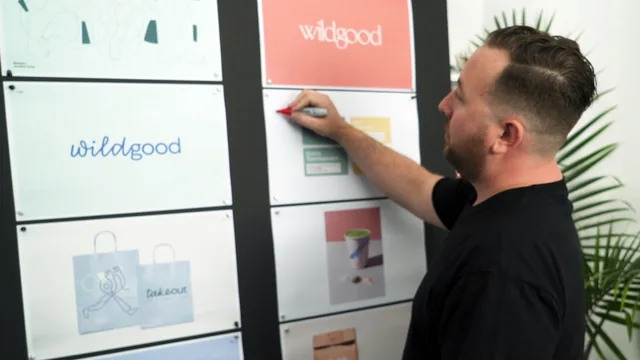
A branding studio founder walks through his real WildGood ice cream project to show how strategy, not software, is what separates a logo-maker from a brand builder.
Alex Center's class is not a software tutorial. There is no Illustrator screen-share, no typeface pairing walkthrough, no color-picking demo. What it offers instead is a process, the sequence a branding studio actually runs between a client's first meeting and a finished identity system, told through one real case: WildGood, a dairy-free ice cream brand built for a Greek entrepreneur entering the American market.
Strategy before pixels
The class opens by insisting that branding starts with questions, not sketches: who is this for, what would the world lose without it, and who else competes in the category. Center demonstrates this with his own past work on Powerade, explaining how the brand was positioned as the scrappy opposite of Gatorade specifically because Gatorade owned the "champions and heroes" territory. That contrast is more instructive than any abstract definition of positioning, because it shows strategy as a competitive choice, not a mission-statement exercise. The WildGood throughline, built around the idea of "nature purely transformed," gets built the same way, from conversations with the founder about how he actually makes his ice cream.
Touchpoints and the visual system
The most useful structural idea in the class is the four-part touchpoint framework: iconic (the logo and elements that barely change), extrinsic (seasonal or campaign expressions, like Coca-Cola's polar bears), intrinsic (the product experience itself, taste and texture), and collaboration (how the brand behaves in partnerships). It gives students a checklist for deciding where a brand needs to show up before any design work happens, which is more transferable than most "mood board" advice. From there, the class walks through WildGood's five presented directions, focusing on the winning "radiating goodness" concept, a script-and-circle system meant to evoke a seed multiplying into a forest, applied across cups, signage, and even interior lighting.
Two short "Brandsplaining" segments interrupt the case study to unpack real packaging. The bodega segment is mostly reflection on why shelf competition matters. The Vitaminwater segment is sharper, breaking down how a line like "for best results stick it in the fridge" does more brand work than the generic instruction it replaces. It is a small but concrete lesson in how copy tone functions as identity, more specific than most of the class's other claims.
What holds it back
The strategy-to-visual leap is asserted more than taught. Center shows the finished "radiating goodness" system and explains why it works retrospectively, but the actual decision process from a written positioning statement to a specific typeface and circle motif is compressed into a few sentences about researching Greek mythology and "going with your gut." Viewers hoping to reverse-engineer a repeatable ideation method will come away with a case study, not a method.
The assignment, invent a beverage brand and build its identity, is open enough to work for almost any student, but the class gives little scaffolding for anyone without prior design skill to execute it. This is squarely an intermediate class: it rewards someone who can already design and wants a client-facing framework for justifying and structuring that design, not someone learning to design from nothing. Taken on those terms, at well under an hour, it delivers a clear and genuinely useful vocabulary for talking about brand strategy, even if the visual execution stays mostly behind the curtain.
The standout
The touchpoint quadrant framework, iconic, extrinsic, intrinsic, and collaboration, gives a concrete, reusable way to decide what belongs on packaging versus a pop-up versus a partnership.
What you will learn
- How to build a brand strategy foundation from purpose, mission, and category positioning before any visual work starts
- How to map brand touchpoints using the iconic/extrinsic/intrinsic/collaboration framework to decide where and how a brand should show up
- How to translate a strategic idea into visual concepts, illustrated by the WildGood 'radiating goodness' direction built from a grow typeface and rippling circles
- How to assemble a brand toolkit (logo, color, type, patterns, photography) that can extend across dozens of applications
- How to read packaging copy as a branding tool, using Vitaminwater's label language as a case study in human, benefit-first writing
- How to present multiple design directions to a client and defend chosen work using the agreed strategy
Best for: Graphic designers and junior brand designers who already know visual craft and want a repeatable strategic process for pitching and structuring client branding work.
Skip it if: Beginners looking to learn logo design software, typography fundamentals, or step-by-step Illustrator technique, since no design tools are demonstrated on screen.