
Bookkeeping for Freelancers: How to Handle Your Finances
Emily Simcox · Training Team Lead @ Bench
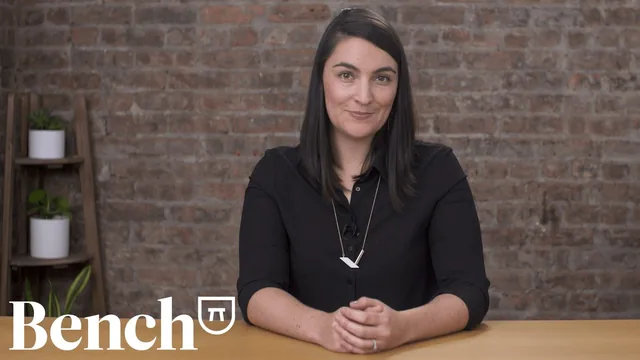
A Bench.co trainer walks freelancers through choosing cash vs. accrual and single- vs. double-entry bookkeeping in under 40 minutes, though the free tool she demos is Bench's own.
Emily Simcox, a training lead at the bookkeeping firm Bench, built this class around a simple premise: most freelancers avoid bookkeeping not because it is hard but because nobody ever explained the choices involved. The nine lessons move in a logical arc, from why bookkeeping matters, through the two big decisions every small business has to make (single-entry versus double-entry, cash versus accrual), into practical mechanics like categorizing transactions and organizing receipts, and out through a hire-versus-DIY decision framework.
The strongest material sits in the middle third. The explanation of single-entry versus double-entry bookkeeping is concrete rather than abstract: single-entry gets defined as recording only one side of a transaction, useful for a sole proprietor with simple needs, but disqualifying the moment credit cards, loans, or payroll enter the picture. The cash-versus-accrual section follows the same pattern, walking through pros and cons on both sides rather than declaring a winner, and correctly flags that switching bookkeeping methods later requires IRS permission, a detail many beginner explainers skip.
The personal-versus-business separation lesson introduces a genuinely useful mental shortcut: the "straight face test," where you imagine explaining an expense to an IRS agent and ask whether you could say "yes, this was for business" without flinching. It is the kind of memorable heuristic that beginners can actually carry into their own spending decisions, more useful than a dry list of deductible categories.
Where it thins out
The categorizing-transactions lesson is the most practically dense part of the course, mapping chart-of-accounts categories directly onto Schedule C line items like business meals, auto expenses, and rent or lease. That is a real, usable connection between bookkeeping and tax filing. But the course never goes further than Schedule C for a sole proprietor, so anyone operating as an S-corp or partnership will find the tax framing incomplete.
The documents lesson covers retention rules (seven to eight years), the $75 receipt threshold, and organizing by employee versus by client-reimbursable expense, all useful housekeeping advice. But it stays at the level of general principle rather than showing an actual spreadsheet or folder structure being built.
The sponsorship problem
The course is a thinly wrapped funnel for Bench's own services. The single-entry demonstration uses "Bench's free income statement generator" rather than a neutral spreadsheet, the hiring-versus-DIY section pivots into a description of what "Bench does best," and the closing pitch offers a Skillshare discount on Bench's bookkeeping service. None of this makes the underlying advice wrong, but it means viewers get one tool demoed in detail while alternatives like QuickBooks, Xero, and Wave are only named in passing.
At 38 minutes, this earns its place as a beginner orientation. It will not teach anyone to actually keep books, since there is no walkthrough of building a real ledger, reconciling a bank statement, or closing out a month. What it does well is frame the decisions a new freelancer needs to make before opening a spreadsheet, which is exactly the gap it claims to fill.
The standout
The Schedule C mapping exercise, which shows exactly how income-statement categories like meals, travel, and rent translate into the actual tax form line items a sole proprietor files.
What you will learn
- How to separate personal and business expenses using the 'straight face test' and the ordinary-and-necessary standard
- The difference between single-entry and double-entry bookkeeping and which businesses qualify for the simpler method
- How cash basis and accrual basis accounting differ, plus the tax and cash-flow tradeoffs of each
- How to build a chart of accounts and map expense categories directly onto Schedule C line items
- When bookkeeping needs outsource-worthy complexity versus when DIY in Excel or free software still works
- Which receipts and supporting documents to keep, for how long, and how to organize them for an audit
Best for: A brand-new freelancer or sole proprietor who has never separated personal and business money and needs a plain-language map of their options before picking a system.
Skip it if: Anyone already running QuickBooks or Xero, managing inventory, or needing accrual-basis mechanics beyond a surface definition, since the course stays at the conceptual level throughout.