
Becoming Creative / An Artistic Guide to Creativity
Brent Eviston · Master Artist & Instructor
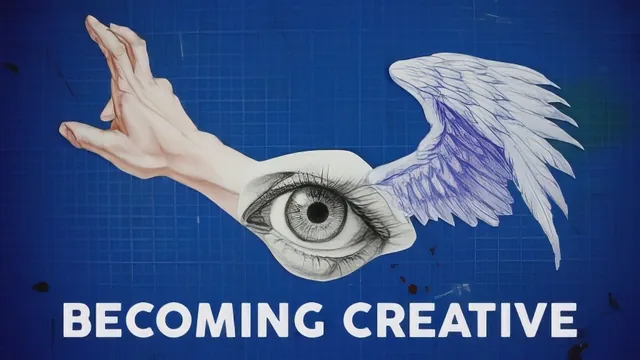
A veteran drawing teacher builds a case, backed by a real NASA-linked study, that creativity is trainable through habit disruption, journaling and cut-paper collage rather than more art technique.
Brent Eviston is best known for teaching people to draw, but this course deliberately steps away from that. It opens by citing a longitudinal study, originally developed for NASA, in which a test of divergent thinking found 98 percent of five-year-olds scoring at genius levels, dropping to 30 percent by age ten, 12 percent by fifteen, and roughly 2 percent in the adult population. That statistic sets the whole course's premise: creativity isn't a talent some people lack, it's a capacity most people lose, and the course exists to help recover it.
Structure and core ideas
The thirteen lessons alternate between short conceptual talks and two kinds of projects: drawing-based "creativity projects" and private "guided journal" writing prompts. The conceptual spine is the divergent versus convergent thinking distinction. Convergent thinking narrows toward one correct answer and dominates schooling and workplaces; divergent thinking generates many possibilities without judging them, and is the mode the course tries to restore. From there it introduces "openness to experience" and a related idea borrowed loosely from cognitive psychology, latent inhibition, the brain's tendency to filter out the mundane. The suggested countermeasures are concrete and a little eccentric: brush your teeth with the other hand, rearrange furniture, deliberately read a book from an opposing political or religious viewpoint, or take up an unrelated creative skill (Eviston mentions learning cello badly, specifically to change how he thinks about drawing).
The drawing projects follow their own arc. Students draw three inanimate objects from observation, then two human body parts and one animal part, always framed around meaning rather than accuracy, what memories or associations an object surfaces rather than how well it's rendered. Those six drawings are then cut out with scissors and a craft knife and physically recombined into new, often surreal composite images, an exercise meant to train the mind to notice unexpected connections between unrelated things. A later lesson on mistakes and failure normalizes the messiness that divergent work produces, and the course closes with a general-purpose method for applying the same thinking to any personal goal: name a specific creative area, then run a batch of quick, low-stakes variations (twenty quick paintings in different styles, twenty one-paragraph story sketches) rather than one polished attempt.
What works and what doesn't
The course succeeds at what it sets out to do: separate creativity instruction from technical art instruction and hand beginners a repeatable process rather than vague inspiration. The collage-combination exercise in particular earns its place, it's tactile, produces visibly strange and interesting results, and makes an abstract idea (divergent thinking) something a student can watch happen in their own hands. The habit-disruption and belief-challenging material is less rigorously sourced than the opening research citation and drifts toward self-help territory, useful as prompts but not backed with the same evidence.
The bigger limitation is pacing and audience fit. Eviston recommends no more than one lesson a day, which stretches a genuinely useful core idea across what can feel like a long commitment, and the journaling components require real self-reflection that won't suit every learner. Anyone hoping to leave with better drawing skills will be disappointed, that's explicitly not the goal here, and the course says so upfront rather than burying the caveat.
The standout
The final cut-out collage exercise, where six hand-drawn objects and body parts get physically recombined into new images, gives the abstract idea of divergent thinking a genuinely hands-on, repeatable form.
What you will learn
- The George Land NASA-adjacent creativity research showing scores drop from 98 percent at age five to 2 percent in adulthood, and what that implies about recoverable creative capacity
- The practical difference between divergent thinking (generating many possibilities) and convergent thinking (narrowing to one correct answer), and when each is useful
- Concrete methods to raise openness to experience: disrupting daily habits, deliberately reading opposing viewpoints, and picking up an unrelated creative skill
- A drawing sequence built around meaning rather than technique: three inanimate objects, then two human body parts and one animal part, drawn from observation
- A cut-and-recombine collage method that turns those drawings into raw material for spotting unexpected, meaningful connections
- A four-step framework for designing a personal creative project in any field, from painting style to graphic-novel storytelling
Best for: complete beginners or lapsed creatives who want a structured, research-referenced framework for rebuilding creative thinking through journaling and simple drawing, with zero pressure to produce finished art.
Skip it if: anyone looking to improve drawing technique, or anyone unwilling to do sustained private journaling and slightly odd behavioral exercises like brushing teeth with the wrong hand.