
Become A Greeting Card Designer
Anne Bollman · Anne Was Here
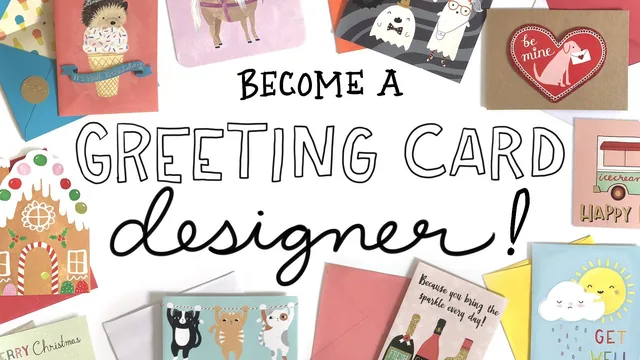
A five-year veteran of licensing hundreds of card designs hands you her exact submission playbook in under 40 minutes.
From Store Aisle to Submission Folder
Anne Bollman's class does not pretend to teach drawing, and it says so within the first minute. What it teaches instead is the business logic of an industry most illustrators never see explained: how a piece of art becomes a card on a shelf. The course moves in a tight, logical arc across four real lessons: study the market, design within its constraints, package the work, and submit it to the right people. For 38 minutes, that is a lot of ground covered without padding.
The market study section is the course's strongest structural idea. Rather than telling students to "find their niche," it gives a concrete research method: pick one or two themes, visit stores and websites, and log each card's media, imagery, color palette, text tone, and embellishments. Applied to birthday cards, this produces a genuinely useful pair of teardown examples, one comparing a digitally illustrated Papyrus card against a hand-painted, embossed Studio Oh card. The exercise reframes browsing a card aisle as competitive research rather than idle inspiration.
The design lesson is where the course earns its "intermediate" label. It assumes Photoshop fluency and pushes straight into production mechanics: working at minimum 5x7 with bleed, setting files to 300 DPI and CMYK for print, keeping icons and backgrounds on separate layers so manufacturers can resize or reuse elements. The embellishment catalog, foil, glitter, die cuts, spot UV, pop-ups, is a useful vocabulary lesson for anyone who has looked at a fancy card and not known what to call its finish. It is descriptive rather than instructional, though: students learn what these techniques are called, not how to mock them up convincingly.
Where the Course Delivers
The submissions module is the clear payoff of the class, and it is unusually specific for a Skillshare course. It walks through writing a short pitch email, finding manufacturers by checking the fine print on the back of physical cards, and locating contacts through a pattern-matching trick using one known employee email address to guess another. It also sets realistic expectations for silence, rejection, and the "what else do you have" response, which matters for anyone new to cold outreach and prone to over-reading a non-answer.
The contract overview closes the course with real distinctions between work-for-hire, flat-fee buyout, flat-fee license, and royalty license, along with what to check for in exclusivity scope and term length. It is a genuinely valuable primer for a first negotiation, though it stops short of walking through an actual contract line by line.
Limitations
The class project, sketch three ideas, design one, lay it out for presentation, is a reasonable capstone, but it leans entirely on skills the course assumes students already have. There is no feedback loop or example of a finished presentation sheet being critiqued. And because the whole class is built from one designer's personal experience and anecdotes, it reads more like a compressed briefing from someone who has done the work than a structured curriculum, which suits its short runtime but leaves less room for nuance in areas like pricing negotiation, where Bollman openly says the answer varies by artist and can't really be taught. For its length, it earns its keep as a business-side companion to whatever illustration skills a student already brings.
The standout
The email-pattern trick for deducing an art director's address from a known employee's email format turns an opaque cold-outreach problem into a repeatable tactic.
What you will learn
- How to research a greeting card theme by cataloging media, imagery, color palette, text tone, and embellishments from 10 to 25 store cards
- Technical production specs: 5x7 minimum with bleed, 300 DPI CMYK for print files, 72 DPI RGB for email submissions
- How to build a layered presentation sheet with contact info and copyright marks for email pitching
- A method for finding manufacturer email addresses by pattern-matching known contacts (e.g. harry.smith@ becomes julie.jones@)
- How to read a licensing contract for exclusivity scope, term length, royalty versus flat-fee structure, and artist credit
Best for: Illustrators who already have a developed art style and Photoshop or Illustrator fluency but no idea how the greeting card industry actually buys and licenses art.
Skip it if: Beginners still developing drawing or painting skills, since the class explicitly skips technique and assumes a finished artistic voice.