
Art School Boot Camp: Developing Your Style
Christine Nishiyama · Artist at Might Could Studios
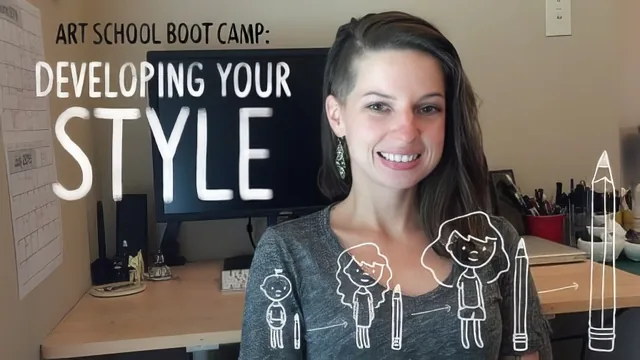
A ten-minute reflection exercise on artistic influence, not a skill-building class, so it rewards artists already producing work.
A framework, not a technique class
"Art School Boot Camp: Developing Your Style" is a short reflective module inside a larger series, and it announces that scope honestly. It does not teach anatomy, color mixing, or composition. Instead it addresses the question of why one artist's work looks recognizably theirs, and it proposes that style is not chosen but discovered through accumulated output.
The core of the class is a five-stage progression: honing interests, honing craft, honing taste, honing voice, and honing what the instructor calls interest (a slightly redundant label for the stage where recurring habits become visible). Each stage is illustrated with a small personal anecdote, tracing a path from childhood drawing through copying favorite characters, encountering a piece of art that resonates deeply, following subject-matter curiosity, and finally noticing which elements keep resurfacing across a body of work. The stages are loosely defined rather than rigorously distinct, and the course is upfront that this is one artist's retrospective account of her own path rather than a validated model, which is a reasonable way to frame something this subjective.
The connective idea, delivered in the third lesson, is that none of the stages advance without volume: style surfaces through repeated output, including the pieces that fail. That argument is the philosophical spine of the class, and it lands better than the stage framework itself because it is a claim that can actually be tested against a viewer's own experience.
The influence map exercise
The concrete deliverable is an influence map: a template populated with images from the movies, TV shows, and books that mattered most in childhood, narrowed to nine items, sourced through image search, and arranged into a labeled collage. The instructor walks through building her own, citing My Neighbor Totoro, The Lion King, Sailor Moon, and Old Possum's Book of Practical Cats among her selections, and explains how looking at the finished map surfaced forgotten interests and visual affinities she had let lapse as an adult.
This is a genuinely useful exercise for anyone who has stalled creatively, because it externalizes influences that usually stay vague and unspoken. Turning them into a visual reference sheet makes it easier to notice patterns, such as a recurring color sensibility or a subject matter that keeps returning, that would otherwise be hard to articulate. The instructions themselves are simple: a six-step list covering the template, the source list, narrowing to nine, sourcing images, arranging them, and labeling credits.
Where it falls short
The class is thin on rigor. The five-stage progression is asserted rather than demonstrated, and the examples supporting it come entirely from one artist's biography, with no acknowledgment of how differently this might play out for someone working in a different medium or starting later in life. At ten minutes, there is no time to trouble-shoot the exercise, show a second worked example, or address what to do if the influence map turns up nothing useful.
For an artist already producing regular work and looking for a low-effort way to reflect on what threads their pieces together, the exercise justifies the time. For anyone hoping for craft instruction or a rigorous theory of style, this will feel more like a personal essay with a homework assignment attached than a structured course.
The standout
The influence map exercise, which turns vague nostalgia about childhood media into a concrete visual reference sheet for spotting recurring aesthetic threads in your own work.
What you will learn
- A five-stage framework for how artistic style typically develops, from honing interests to honing a personal voice
- Why repetition and failed pieces are described as the mechanism that surfaces recurring habits in a body of work
- How to build a personal influence map from childhood movies, TV shows, and books
- How to translate an influence map into concrete visual leads like color palettes, subject matter, and technique
- A rationale for treating style as something found through volume of output rather than chosen deliberately
Best for: Artists who already make work regularly but feel unsure what ties it together or where to push it next.
Skip it if: Total beginners looking for drawing, painting, or technical instruction, since this class assumes craft skills are being built elsewhere.