
Art Hacks To Overcome Creative Block : The Power Of Series
Margarita Bourkova · artist | dreamer | infp
Twenty-two minutes reframes creative block as a restriction problem and hands you a series-based way out of it.
Margarita Bourkova's course tackles a specific, narrow problem: not knowing what to draw. Rather than teaching a drawing technique, it teaches a thinking technique, using the concept of a "series" as a container for practice. The core idea, borrowed loosely from art history references like Monet's repeated cathedral studies or Mondrian's tree variations, is that repetition with a twist removes the burden of decision-making. Once a restriction is set, whether that's a subject, a time limit, or a shape, the blank page stops being intimidating because the parameters are already decided.
What the exercises actually teach
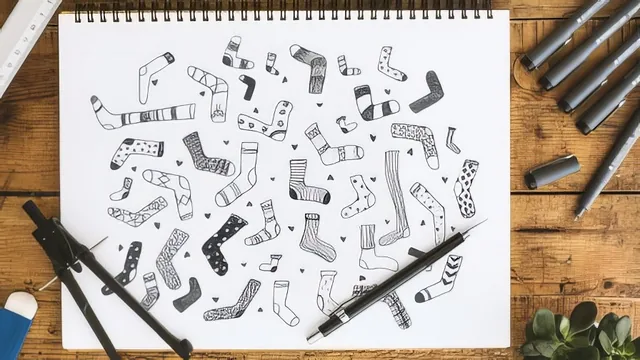
The course walks through three flavors of restriction. Subject-based series ask the viewer to pick something from daily life, whether that's houseplants drawn from observation, lamps sketched in a three-minute sprint, or socks invented purely from imagination. Shape-based series take a repeated form, in this case watercolor circles, and use it as scaffolding for later doodles, including a short aside on drawing mushrooms inside a circle outline. Pattern-based series are the loosest of the three, filling repeated outlines like a leaf shape with different textures pulled from wallpaper, fabric, or furniture. Each exercise is demonstrated with real, visible sketchbook pages rather than abstract description, which makes the advice concrete even when the drawings themselves are intentionally rough.
What ties the exercises together is a repeated instruction to stop caring about quality. The emphasis throughout is on quantity and completion: filling a page, finishing a set, building a visible collection you can point to later. That reframing, treating wobbly lines and wrong perspective as acceptable because the goal is observation rather than polish, is arguably the most useful mental shift the course offers, more useful even than any single exercise.
Where it falls short
The course is honest about its scope, and that honesty is also its main limitation. At 22 minutes across seven short lessons, there isn't room for depth on any single exercise. The shape and pattern lessons in particular move quickly, more demonstration than instruction, and viewers looking for guidance on composition, color mixing, or rendering will find none. The mushroom-drawing aside is a nice bonus but underscores how loosely structured the back half of the course is compared to the more methodical subject-based section.
There's also no real skill progression. Nothing here builds toward a finished piece or a portfolio-ready outcome; the series format is explicitly positioned as a warm-up or a return-to-practice tool, not a project pipeline. Viewers already comfortable generating their own prompts may find the whole premise obvious.
Still, for what it sets out to do, the course delivers. It's built around a genuinely reusable idea, not a one-off tutorial, and the closing suggestion to keep a folder of past series as visual proof of consistency is a small but practical habit worth adopting. Anyone who has stared at a blank sketchbook page and closed it again without drawing anything will recognize the problem this course is solving, and the solution it offers, impose a restriction and just collect, works because it's simple enough to actually use.
The standout
Pre-painting a page of colorful watercolor circles in advance, then returning to fill them with quick doodles whenever motivation is low, turns preparation into a ready-made antidote for block.
What you will learn
- How to design a self-imposed restriction (subject, time limit, or medium) that removes decision paralysis
- How to build a subject-based series from photo references, live references, and pure imagination
- How to pre-paint a page of watercolor circles to use later as an instant drawing prompt
- How to turn a simple repeated shape into a pattern-based series using textures from your own environment
- How to build and maintain a personal inspiration board as an ongoing motivation tool
- How to reframe unfinished or rough sketches as successful data collection rather than failures
Best for: Hobbyist sketchers and illustrators who already know basic drawing but freeze up when deciding what to draw next.
Skip it if: Anyone wanting technical skill-building in anatomy, rendering, or color theory, since this course is entirely about generating ideas, not improving execution.