
Accounting Fundamentals: Understanding Financial Statements
Matt Cooper · CEO of Skillshare
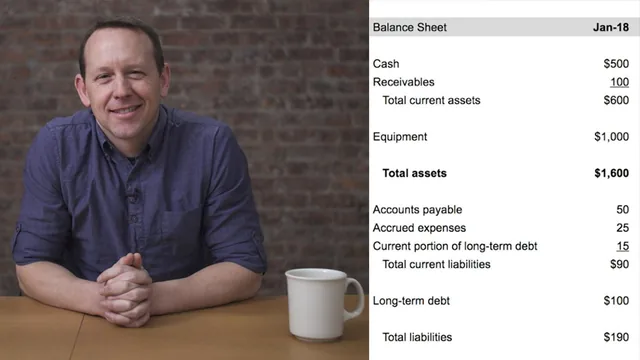
Skillshare's own CEO walks one lemonade stand through all three financial statements in under 46 minutes, numbers included.
Matt Cooper, Skillshare's CEO, teaches this class the way a good manager explains the numbers to a new hire: no jargon left unexplained, one running example carried through every section. That example is a fictional lemonade stand, complete with a cookie line, a lemonade subscription tier, and a small consulting side hustle, run by Cooper's own kids in the narrative. It is a deliberately childish setup for a deliberately serious goal: showing how a real set of books gets built from nothing.
The course opens by naming its destination early. Three statements, income statement, balance sheet, cash flow statement, and Cooper spends the first two lessons defining the vocabulary that ties them together: accrual, payable, receivable, and the core equation assets equal liabilities plus equity. This upfront investment pays off later, because every subsequent lesson leans on those same four or five terms rather than introducing new ones.
The accrual-versus-cash lesson is the strongest single stretch in the class. Cooper uses a debit card for cash accounting and a credit card for accrual accounting, then applies both to the same lemon purchase: on a cash basis the lemons are an expense the day they are bought, on an accrual basis they sit on the balance sheet as inventory until they are actually squeezed into lemonade. That single example does more to explain the matching principle than most textbook definitions manage in a full chapter.
Building the statements
The revenue lesson is where the course earns its keep for anyone running a real business. Cooper walks through three separate revenue models in one lesson: per-unit product sales (cups of lemonade), a subscription model with starting subscribers, new adds, and churn netted into an average, and hourly billing for the consulting arm. Anyone building a first spreadsheet for a subscription business will recognize the exact formula Cooper uses, average subscribers times price, as the one they need.
The income statement build is methodical almost to a fault. Cooper walks down every line, revenue, cost of goods sold, gross profit, sales and marketing, G&A, depreciation and amortization, R&D, operating income, net income, explaining what belongs in each bucket and why. The distinction between cost of goods sold and operating expenses (lemons and labor to make the product versus rent and legal fees to run the business) is drawn clearly enough that a viewer could reasonably sort their own expenses correctly afterward.
Where it thins out
The balance sheet and cash flow lessons move faster and lean more heavily on the viewer trusting the spreadsheet rather than deriving it. The reconciliation at the end, where a $20 increase in receivables and a $100 equipment purchase are traced through all three statements until the balance sheet balances, is genuinely useful, but it moves quickly enough that a first-time viewer may need to rewatch it once.
Nothing here goes past fundamentals. There is no mention of financial ratios, no discussion of how these statements get audited or used by investors, and no coverage of more complex accrual scenarios like deferred revenue recognition rules. That is by design, not a flaw, given the stated beginner audience.
The project prompt, build your own simple income statement, balance sheet, and cash flow statement for a business of your choosing, is the right kind of assignment: small enough to finish in an afternoon, concrete enough to force real understanding of the concepts rather than passive recognition of them.
The standout
The line-by-line reconciliation between the income statement, balance sheet, and cash flow statement, showing exactly how a $20 rise in receivables or $100 equipment purchase moves through all three sheets and still balances at the end.
What you will learn
- The difference between cash accounting and accrual accounting, illustrated with a debit card versus credit card analogy
- How to build a revenue line from units sold, subscription cohorts (starting plus new minus churn), and billable hours
- How to read an income statement down through cost of goods sold, gross profit, operating expenses, and net income
- How the balance sheet equation (assets equal liabilities plus equity) stays balanced as transactions occur
- Why depreciation and amortization spread an upfront equipment cost over its useful life instead of expensing it all at once
- How a cash flow statement reconciles accrual-based net income back to the actual cash in the bank
Best for: Anyone starting a small business or joining a company who has never read a financial statement and needs the vocabulary and mental model to follow one.
Skip it if: Anyone who already knows the difference between cash and accrual accounting or has built a P&L before, since the pace and content stay at true beginner level throughout.